IN THE face of global headwinds, Finance Minister Nirmala Sitharaman has chosen to stay the course, take a string of measures to shore up manufacturing, and continue to do the heavy lifting on core infrastructure spending, indicating continued sub-optimal support from the private sector.
The Budget may be lacking on ambitious decisions in the second year of Prime Minister Narendra Modi’s third term in office but Sitharaman tries to make up for this by actions such as modest fund allocations to some industries, customs duty cuts on inputs for some others hit by US tariffs, and skilling schemes to tackle the unemployment problem.

All these will take time to play out and add more muscle to the economy. Moreover, a lot depends on effective execution of the many schemes and programmes. The Budget probably recognises this, and it shows only a 10 per cent GDP growth in nominal terms for 2026-27; assuming inflation of 3-4 per cent, this could translate into a real growth rate of not more than 6-7 per cent.
The modest growth estimates notwithstanding, what is disconcerting is that the tax growth is estimated to be just over 7 per cent — lower than the nominal growth rate for the fourth year in a row.
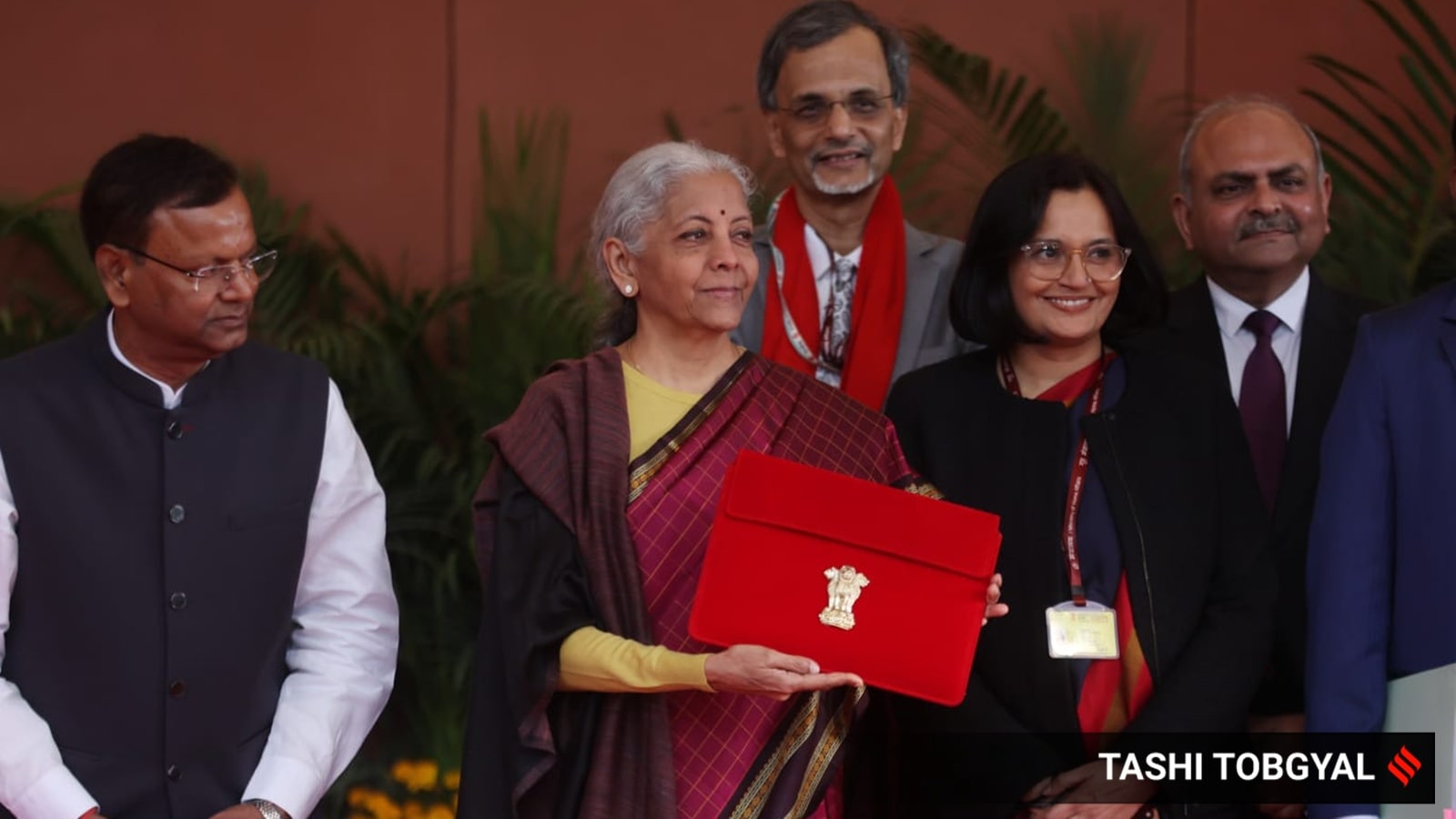 Union Minister for Finance Nirmala Sitharaman poses with her team for a photo op before leaving to present the Budget in New Delhi on Sunday. (Express Photo by Tashi Tobgyal)
What hurt markets the most, despite Sitharaman’s prudence and fulfilling of the promise to keep the fiscal deficit below 4.5% of GDP in 2025-26, is the proposed hike in securities transaction tax for futures and options. This along with the lack of positive triggers led to a sharp drop of 1,546 points or almost 2 per cent in the BSE Sensex. This is the second biggest percentage fall on any Budget day since 2014.
Just three days ago, the Economic Survey 2025-26 had acknowledged drying up of foreign capital, and a resultant weakening of the rupee, as a major concern, raising expectations the Budget would announce measures to lure global capital — FDI and FII — into India. This was belied, so were market hopes of a cut in long-term capital gains tax and restructuring of the withholding tax.
With FIIs shunning Indian equities, the Budget has tried to fall back on Individual Persons Resident Outside India (PROI), largely NRIs and OCI card holders. They can now invest in equities of listed companies through the Portfolio Investment Scheme, with the investment limit for an individual PROI under the scheme from 5% to 10%, with an overall investment limit for all individual PROIs to 24% from the current 10%.
Story continues below this ad
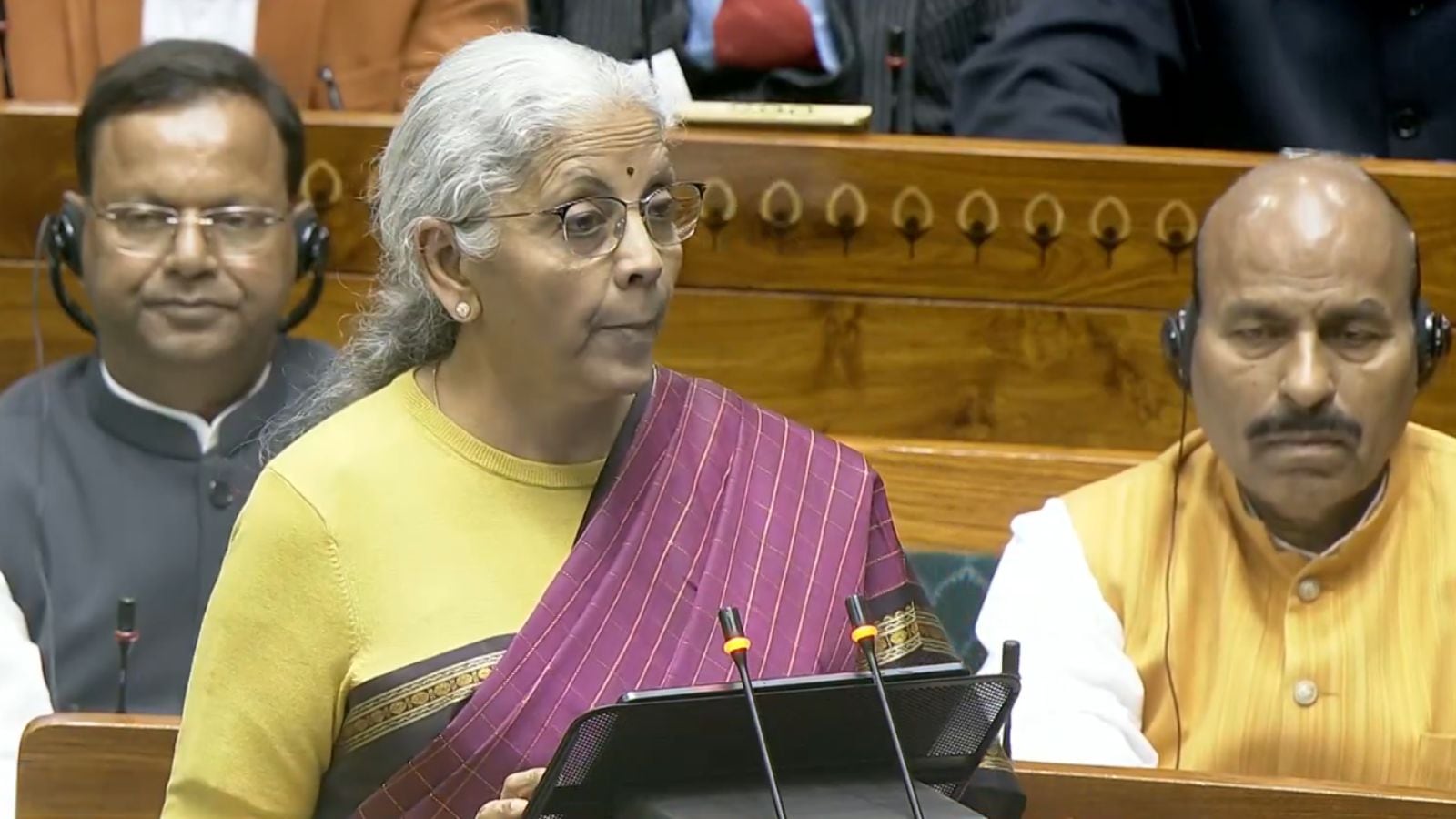 Union Finance Minister Nirmala Sitharaman presents Union Budget 2026, in New Delhi, on Sunday. (Photo: X/Screenshot from Sansad TV video)
Within these constraints, the Budget also has hiked the allocation for capital expenditure by more than 10 per cent to Rs 12.22 lakh crore. Estimated at 4.4% of GDP in the next financial year, its the highest in the last 10 years, coming as it does on top of a 4 per cent increase in capex in the current financial year compared with the actual capex in 2023-24. Analysts said the capex for the next fiscal was probably for the first time higher than the net borrowings excluding small savings. This shows that more assets are being created than liabilities being imposed on the next generation.
The Budget also marks the transition to debt-GDP ratio as the fiscal anchor going forward. While the fiscal deficit for the next financial year is 4.3% of the GDP (compared with 4.4% of the GDP in 2025-26), the debt-GDP ratio is estimated to be 55.6 for the next year compared with 56.1 in 2025-26. The target is to bring it to 50% or lower by 2030-31.
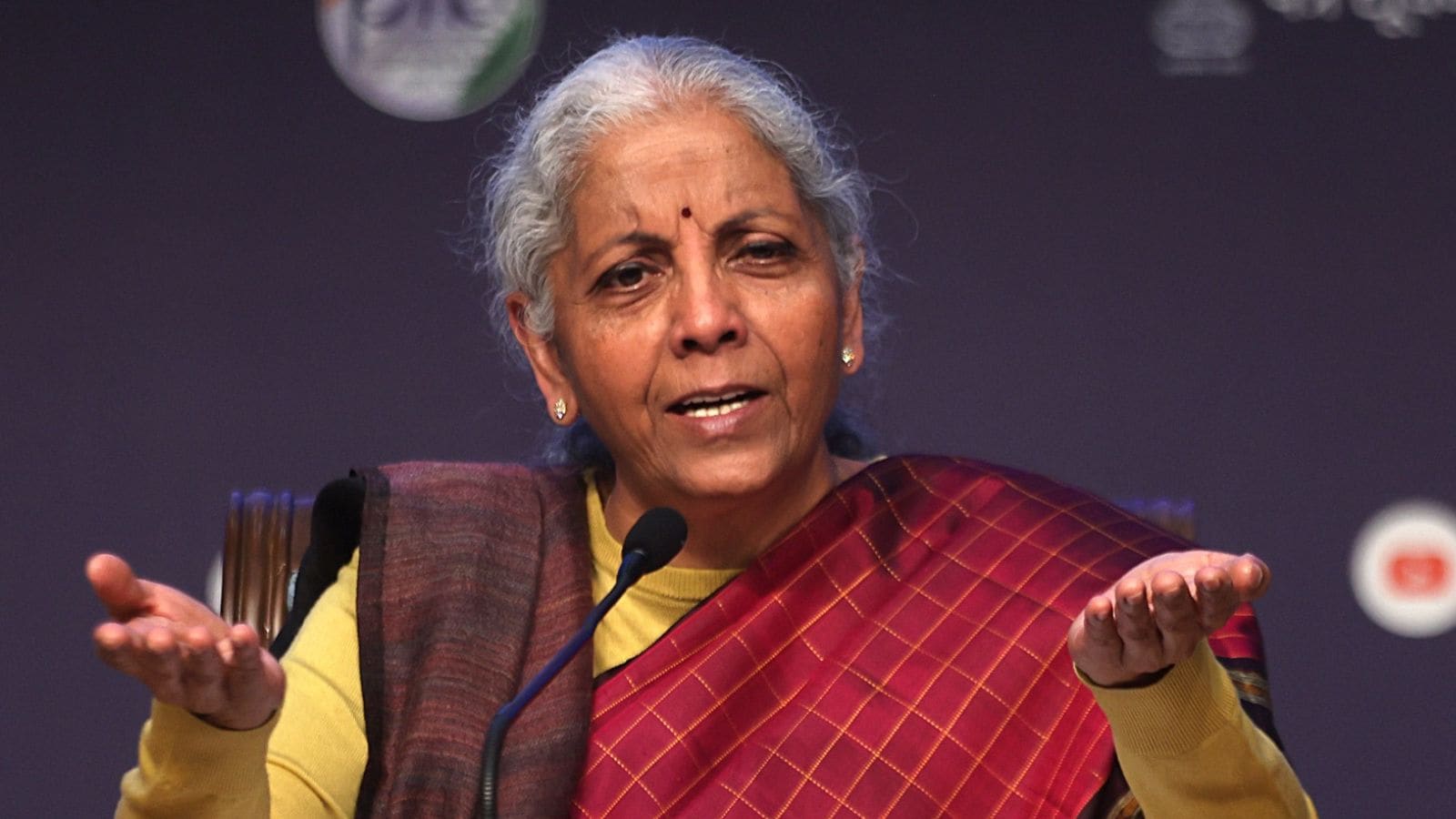 Union Finance Minister Nirmala Sitharaman during the post-Budget press conference in New Delhi on Sunday. (Express Photo: Tashi Tobgyal)
While the fiscal deficit is projected to fall in the coming year, subsidies have in general shown a rising trend over the years. Food and fertiliser subsidies are pegged to be slightly lower in 2026-27 compared with the revised estimates of 2025-26, but lack of any reform to better target these, have meant they remain at elevated levels of almost Rs 4 lakh crore, or approximately 1% of GDP.
In a bid to reduce dependence on China, the Budget has proposed dedicated rare earth corridors to promote mining, processing and manufacturing of these in mineral rich states of Odisha, Kerala, Tamil Nadu and Andhra Pradesh.
Story continues below this ad
As part of the capex push, Sitharaman also announced the development of seven high speed rail corridors as “growth connectors” covering the following sectors: Mumbai–Pune, Pune-Hyderabad, Hyderabad-Bengaluru, Hyderabad-Chennai, Chennai-Bengaluru, Delhi-Varanasi and Varanasi-Siliguri.
Between the lines, a theme that runs through the Budget speech, is the need to create jobs. From a high-powered standing committee on ‘education to employment and enterprise’ focused on the services sector to skills for health care givers and tourist guides, Sitharaman highlighted the need to upgrade skills to provide job opportunities to millions of youth entering the workforce every year.